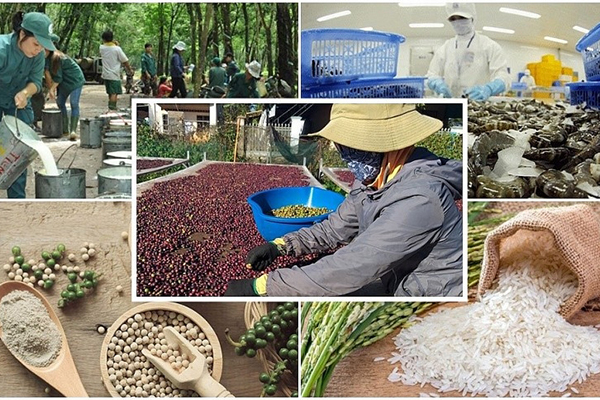
The first quarter of 2025 witnessed the continuous efforts of Vietnam’s agro-forestry-fishery sector in the international market. Despite facing various fluctuations and challenges, the export picture during this period still showed promising signs, while also revealing issues that need to be addressed for sustainable development.
1. Bright Spots in the Export Picture:
Overall, the total export value of agro-forestry-fishery products in Q1 2025 maintained its growth momentum compared to the same period last year, although the increase may not have been groundbreaking. Several key product groups continued to hold their position and recorded stable growth:
- Seafood: Remained a crucial pillar, with shrimp and pangasius still being high-value export commodities. Traditional markets such as the United States, Japan, and the EU maintained stable demand. In addition, expanding into emerging markets also contributed to overall growth.
- Wood and Wood Products: Continued to be one of the leading export industries, benefiting from global demand for furniture and construction. Efforts to improve quality and sustainable forest certification continued to give Vietnamese wood products a competitive advantage.
- Certain Agricultural Products: High-value fruits such as durian, mango, and dragon fruit continued to show good growth potential, especially in the Chinese market after the protocols were signed. Rice also maintained stable export volume and value.
2. However, besides the bright spots, Vietnam’s agro-forestry-fishery exports in Q1 2025 also faced several issues and challenges:
Specific issues that may be encountered:
Stricter documentation requirements and import regulations from markets:
- China market: Continue to strictly implement Decree 248 and 249, requiring enterprises exporting agricultural products, including fruits, to have GACC (General Administration of Customs of the People’s Republic of China) registration certificates. Fully and promptly complying with these procedures may cause difficulties for some enterprises, especially small and medium-sized enterprises.
- Other markets (EU, US, Japan, …): May strengthen regulations on plant quarantine, pesticide residues, traceability and food safety standards. Compliance with these standards requires enterprises to invest in production processes and quality control.
Price fluctuations and market demand:
- Prices of agricultural, forestry and fishery products on the world market can fluctuate due to many factors such as weather, epidemics, and trade policies of countries.
- Import demand of major markets can change due to the global economic situation or specific factors of each country.
Technical and trade barriers:
- Importing countries can set up technical barriers (TBT) and sanitary and phytosanitary measures (SPS) to protect domestic production. This can make it difficult for Vietnamese agricultural, forestry and fishery products to access the market.
- Issues related to unfair competition and trade fraud can also affect reputation and export activities.
Logistics and transportation costs:
- International transportation costs can increase due to fuel prices or geopolitical factors.
Domestic logistics infrastructure may not be able to meet the growing demands of export activities, causing congestion and increasing costs.
3. Solutions to Overcome Challenges:
To maintain growth momentum and achieve sustainable development, Vietnam’s agro-forestry-fishery sector needs to focus on the following solutions:
- Improving quality and meeting standards: Businesses need to invest in processing technology, strictly control quality from production to consumption, and ensure compliance with the stringent standards of import markets, including documentation requirements such as GACC.
- Diversifying markets: Besides traditional markets, it is necessary to vigorously explore other potential markets to reduce dependence and increase export opportunities.
- Building brands and enhancing added value: Focus on building a national brand for Vietnamese agro-forestry-fishery products, while also deeply processing products to increase added value.
- Developing logistics: The State needs to have policies to support the development of logistics infrastructure and reduce transportation costs for businesses.
- Applying science and technology: Encourage the application of science and technology in production to improve productivity, quality, and resilience to climate change.
4. Jointly Protecting the Environment – The Foundation for Sustainable Exports:
A crucial factor that cannot be ignored is joint environmental protection. Sustainable agro-forestry-fishery production is not only a requirement of many demanding markets but also the foundation for the long-term development of the industry. Each individual and organization needs to be aware and take action:
- Farmers: Apply organic farming methods, use water resources economically, limit the use of chemical pesticides, and protect land and water sources.
- Businesses: Invest in environmentally friendly production technologies, manage waste effectively, and aim for sustainability certifications.
- The State: Issue and implement policies that encourage green production, protect biodiversity, and strictly control activities that cause environmental pollution.
- The Community: Raise awareness of consuming sustainably sourced agro-forestry-fishery products and support environmental protection activities.
In summary, the first quarter of 2025 showed positive signs in Vietnam’s agro-forestry-fishery exports, but also posed many challenges that require the efforts and coordination of all stakeholders. Focusing on improving quality, meeting international standards, and especially jointly protecting the environment will be the key for Vietnam’s agro-forestry-fishery sector to develop sustainably and achieve even greater success in the global market.
Other articles:
Other agricultural products: